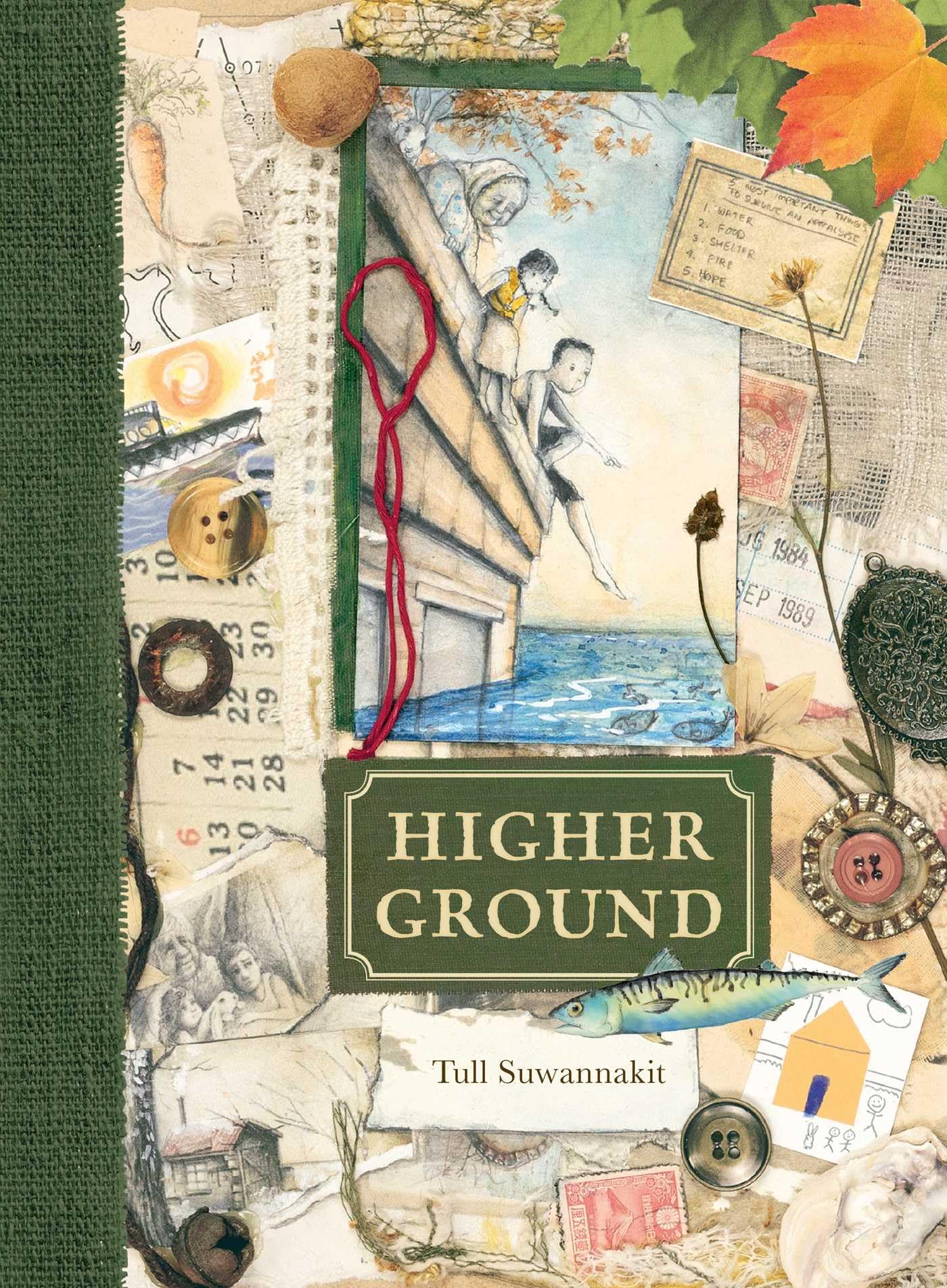
Tull Suwannakit, a Thai-Australian author and illustrator, offers a moving middle-grade story in Higher Ground, a graphic novel that finds light in a submerged world. Published by New Frontier, the story follows a grandmother and her two grandchildren as they adapt to life on an apartment rooftop after a devastating flood. They are not simply waiting for help; they are building a new life centered around a garden, using intergenerational wisdom to survive. Suwannakit’s background in visual arts shines through the watercolor and gouache panels, which ease the task of comprehension in the storytelling. For students who struggle with reading stamina or are still building English proficiency, the book’s structure is a welcome relief. It uses brief, diary-style fragments and simple, declarative sentences like “Grandma said to save it for later.” This sparse prose, combined with the detailed illustrations, ensures that the survival-based vocabulary—terms like “ration” or “sustenance”—is always supported by what is happening on the page. It is an ideal entry point for readers who need high-interest content but benefit from a less dense textual layout.
This book is a standout choice for any educator looking to bring Climate Action (SDG 13) into the classroom through a lens of resilience and care. The narrative focuses on the reflective nature of the characters, modeling how to respond to environmental catastrophe with resourcefulness rather than just fear. The visual sequences often function like survival diagrams; they offer a unique way to connect literacy with science or geography. A teacher might have students analyze the family’s garden as a model for sustainable urban farming or discuss the emotional endurance required to face such a changed landscape. The accessible format ensures that English language learners can participate in these high-level discussions alongside their peers, as the drawings provide the necessary context to understand the stakes of the story. By centering the plot on intergenerational stewardship, Suwannakit gives students a clear model of agency. It shows them that even when the world feels overwhelming, there are practical, small-scale actions—like tending a garden or sharing knowledge—that can help a community hold fast. It is a powerful resource for building both a student’s reading confidence and their sense of global citizenship.