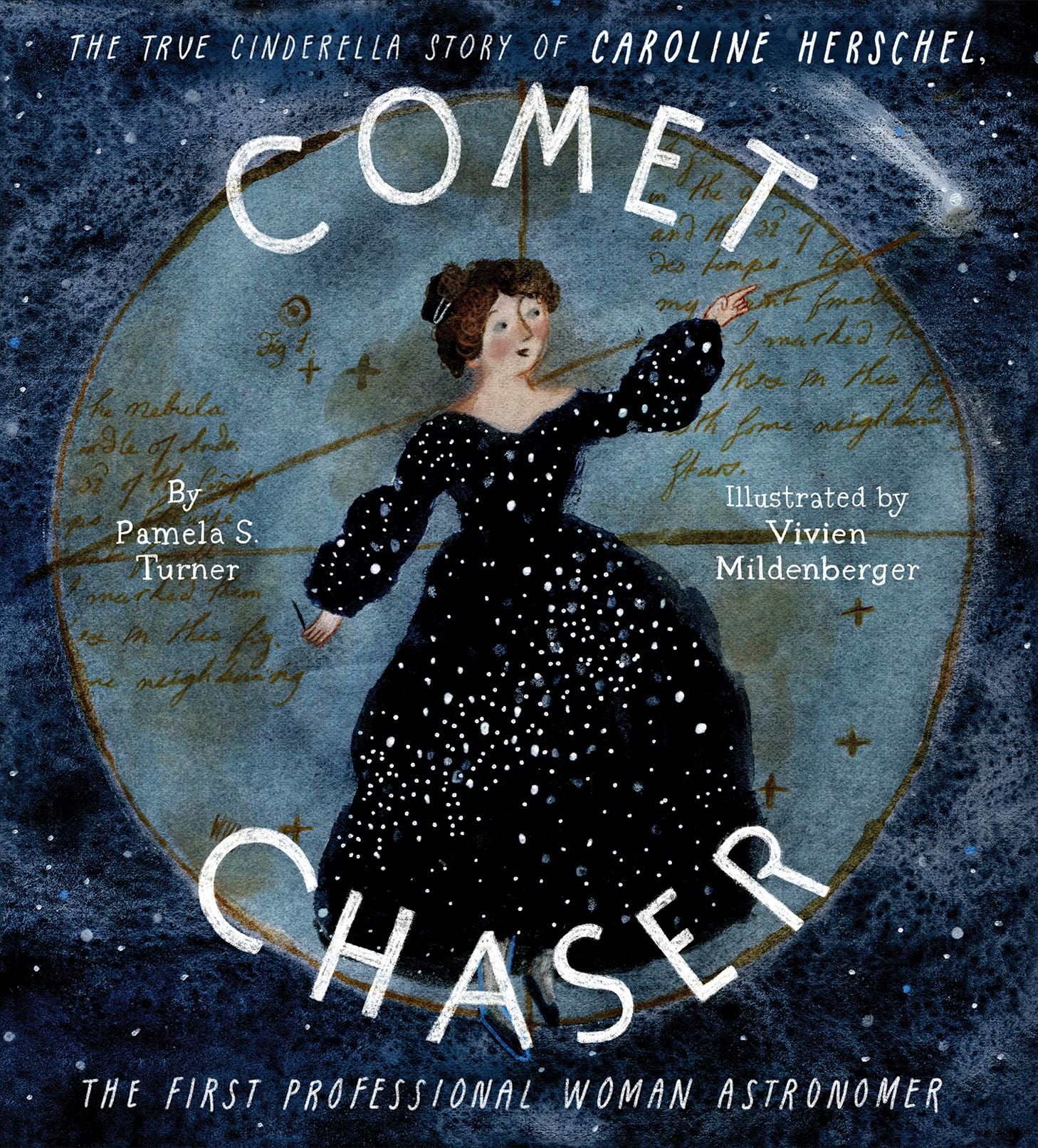
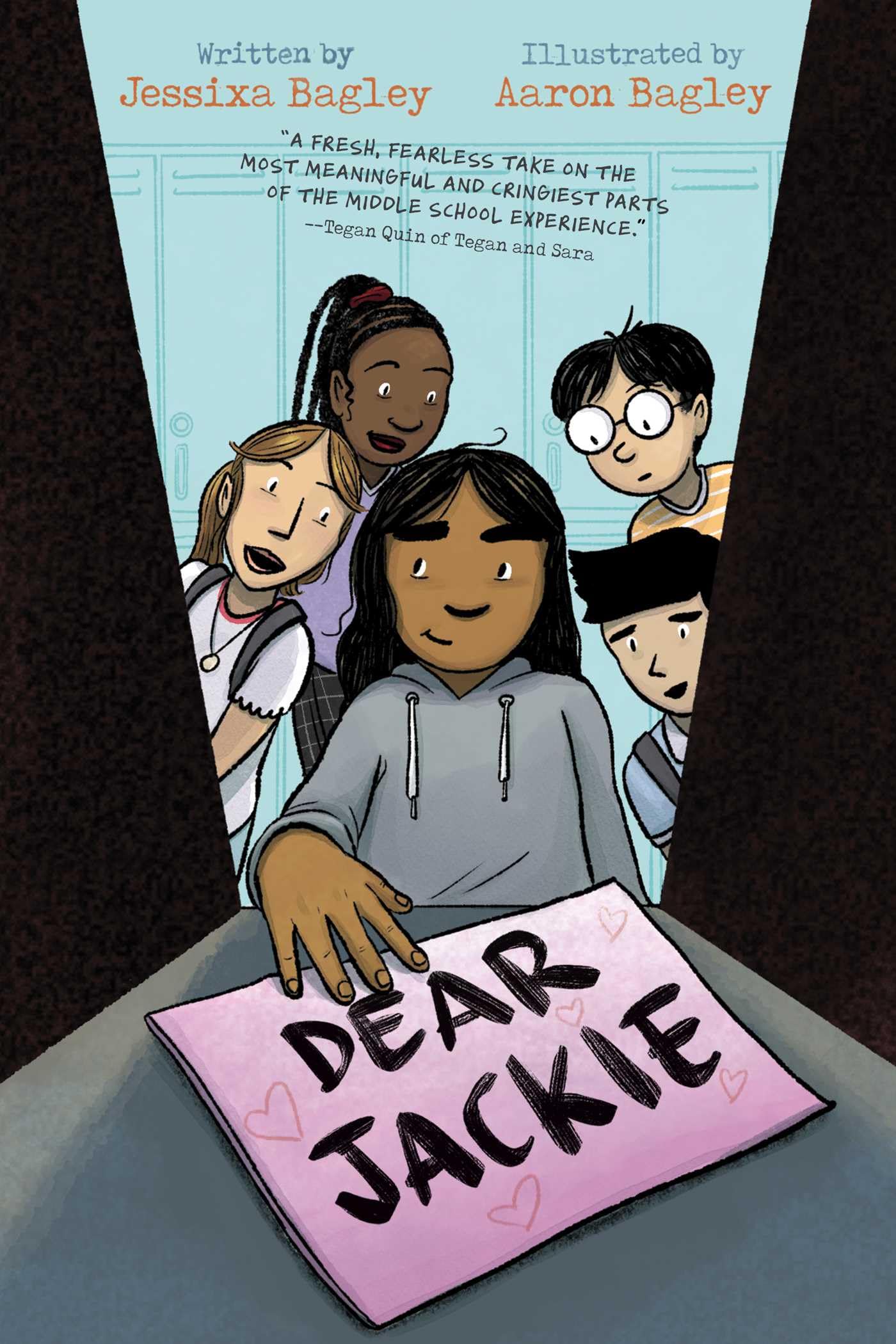
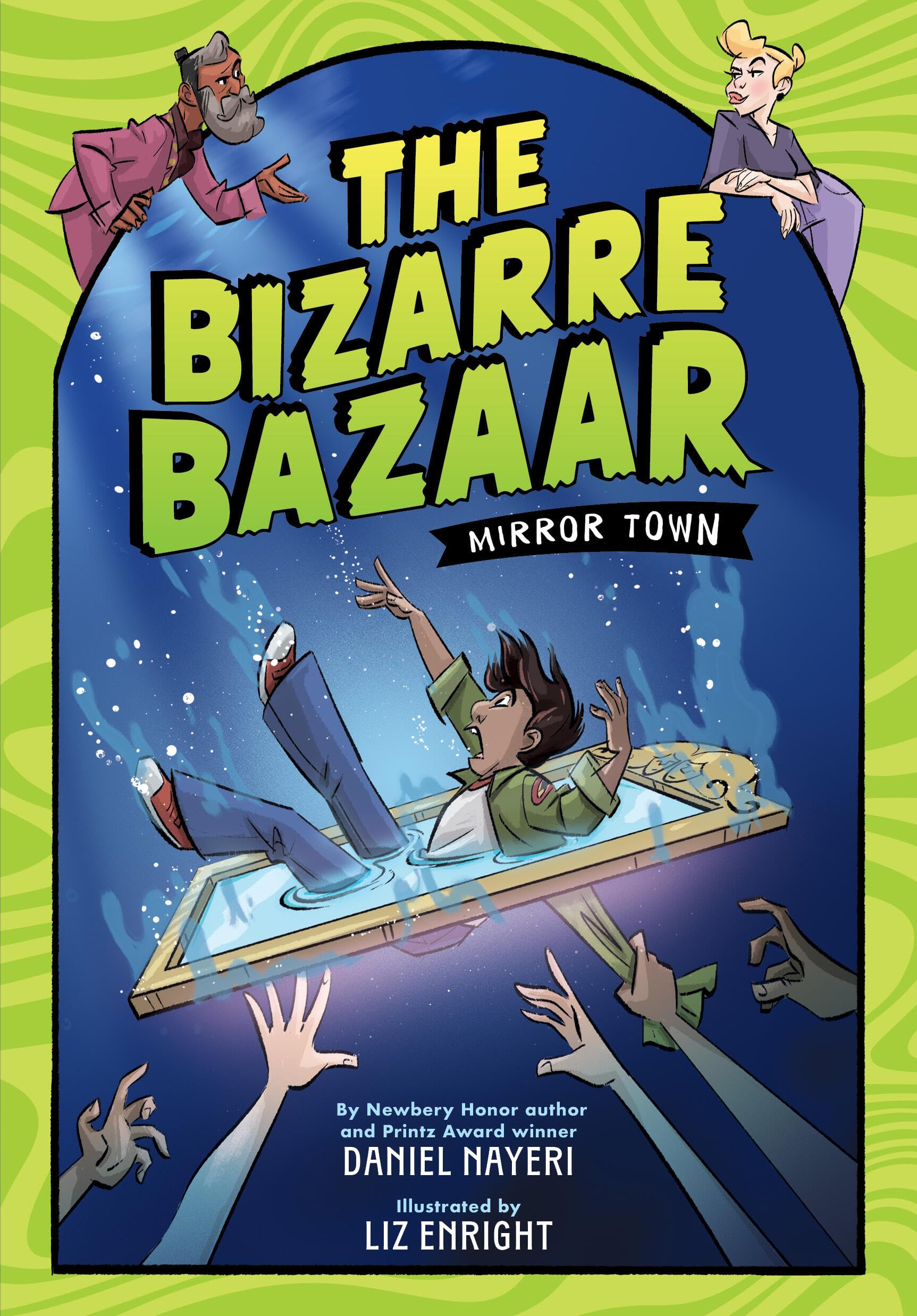
Imagine being told your only future is as a household servant, only to end up discovering eight comets and rewriting the map of the stars.
In Comet Chaser, Pamela S. Turner crafts a striking narrative of Caroline Herschel’s transition from a marginalized daughter in Germany to a pioneering scientist in England. The story begins with Caroline being treated as little more than a servant by her mother, while her father secretly nurtures her intellect through music and mathematics. Her life pivots at age seventeen when she joins her brother William abroad to assist in building massive telescopes and mapping the night sky. Vivien Mildenberger’s atmospheric, mixed-media paintings capture the shift from the dimness of Caroline’s early life to the brilliant clarity of her astronomical finds. This nonfiction biography, which spans 52 pages, has received widespread acclaim, including a SCBWI Golden Kite Honor and starred reviews from Kirkus and Booklist. By documenting her journey toward becoming the first woman officially recognized as a professional astronomer, the book provides a vivid account of how she earned a Gold Medal from the Royal Astronomical Society.
For educators focusing on UN Sustainable Development Goal 5: Gender Equality, this book serves as a primary example of breaking through societal constraints. Caroline’s story is a practical anchor for the IB Learner Profile, showcasing the traits of an “Inquirer” and a “Risk-taker” as she pursues scientific truths in an era that largely ignored women’s intellectual contributions. In the classroom, this narrative provides a natural entry point for a Grade 4 or 5 unit on scientific innovation; students can mirror Caroline’s work by building simple telescope models and recording their own celestial observations. Beyond the science, the book encourages a discussion on equity, allowing students to compare historical barriers with modern-day representation in STEM fields. It doesn’t just present history; it prompts kids to develop their own action plans to advocate for fairness in their own environments. Seeing Caroline transition from a “life of drudgery” to the “belle of the scientific ball” gives students a tangible model of how persistence and personal agency can spark progress.