When the laws of magic are rigged against you, staying silent is no longer an option.
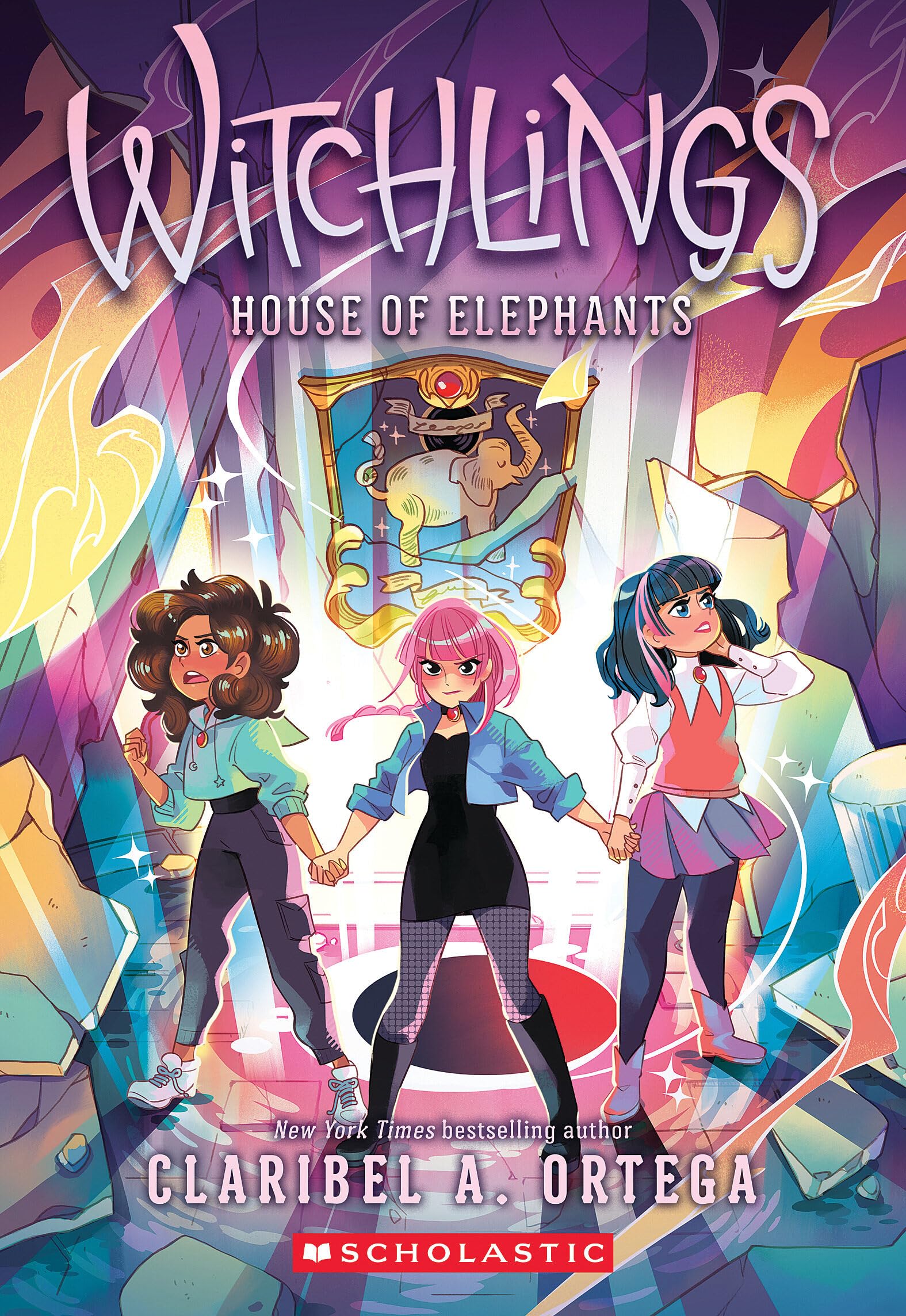
Claribel A. Ortega returns to the enchanted world of Ravenskill in House of Elephants, the third entry in her popular Witchlings series. This middle-grade fantasy continues the journey of Seven Salazar and Thorn Laroux as they desperately seek a cure for their friend Valley, who remains trapped in stone after a devastating hex. While their personal mission is urgent, a larger crisis looms over their community: Spares—witches often looked down upon for having less magic—are vanishing without a trace, and the authorities seem indifferent. When the Black Moon Ceremony arrives early and results in a surge of new Spares, the powerful Hill Society panics, passing discriminatory laws that ban these witches from using magic entirely. Ortega, a Pura Belpré Award winner and New York Times bestselling author, weaves a story that is as much about political corruption and long-buried secrets as it is about spells and hexes.
This novel is a standout choice for any collection focusing on social justice and the UN Sustainable Development Goal of Reduced Inequalities (SDG 10). Rather than just discussing unfairness in the abstract, the plot shows exactly how institutional discrimination works when those in power weaponize fear to suppress a minority group. Educators can use Seven’s investigation into the Hill Society’s “insidious secrets” to anchor a lesson on being principled, within the IB Learner Profile. In a social studies context, students might compare the restrictive laws placed on the Spares to historical civil rights movements, sparking a discussion on how marginalized communities organize for change. By showing Seven and Thorn directly challenging the status quo and demanding investigations into the missing witches, Ortega provides a clear model of youth agency. It demonstrates that even when the system is stacked against you, uncovering the truth and advocating for others is the first step toward dismantling inequality.