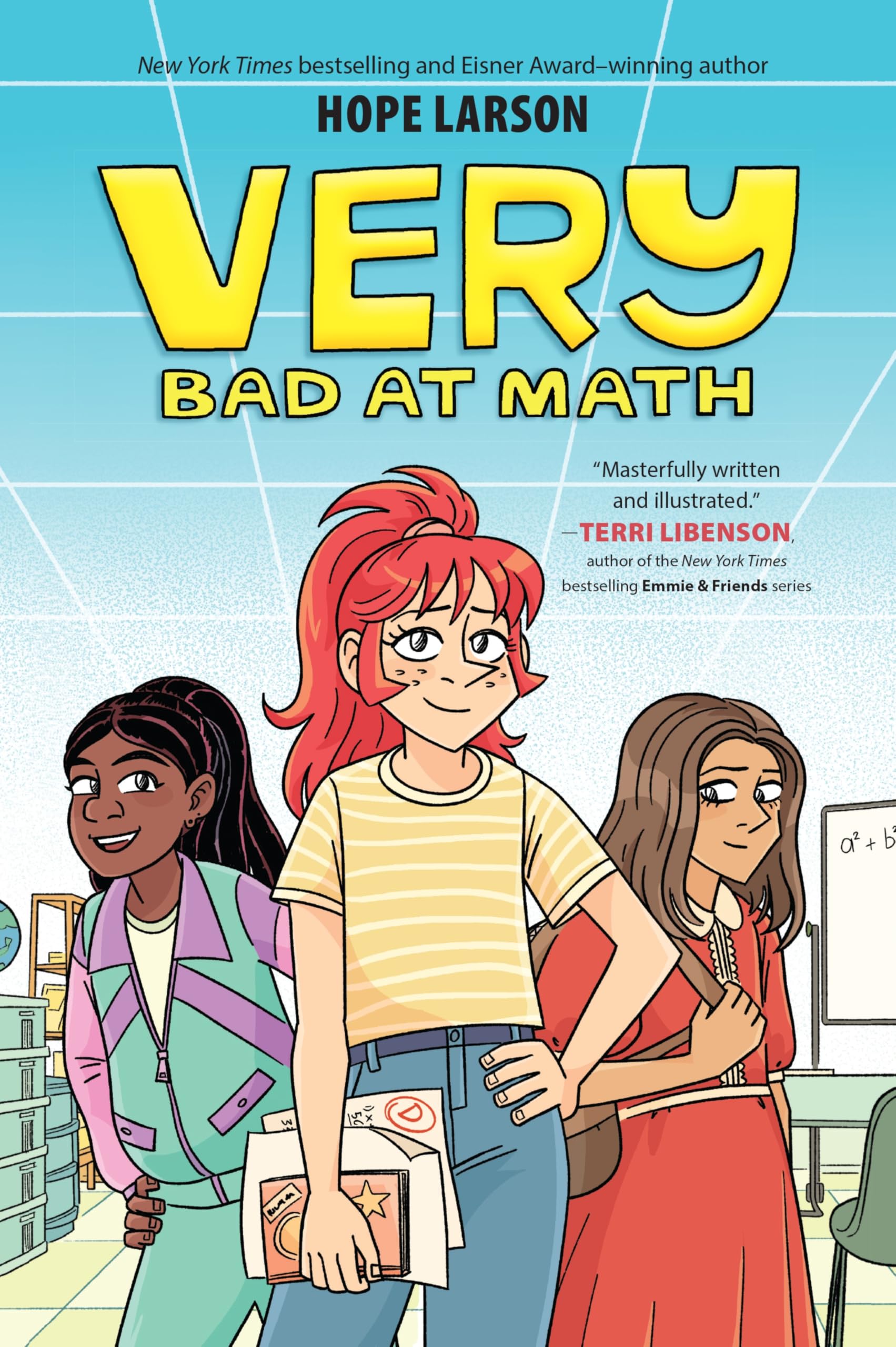
Hope Larson, a multi-Eisner Award winner, brings us “Very Bad at Math,” a middle-grade graphic novel that speaks directly to any student who has ever felt like a failure in the classroom. We follow Verity “Very” Nelson, an eighth-grade powerhouse who serves as student body president and a debate champion, yet feels totally defeated by basic arithmetic. When a remedial math class leads to a diagnosis of dyscalculia, Verity has to face the reality of a learning disability she has spent years trying to hide. For educators looking to support reluctant readers or those still building English proficiency, this book is a fantastic find. The graphic novel format uses dynamic, easy-to-follow layouts that reduce the intimidation factor of a dense text. Larson uses clear, conversational dialogue and simple sentence structures that allow the reader to focus on the emotional weight of the story without getting bogged down by complex syntax. The visuals as well as being decorative, provide essential context for the social dynamics and the specific ways numbers scramble in Verity’s head, making the concept of a learning disability concrete and understandable.
Beyond being a great story for struggling readers, this book serves as a strong entry point for discussing UN Sustainable Development Goal 4: Quality Education. Verity’s journey is a perfect illustration of the IB Learner Profile attribute of caring, as she moves from personal shame to a broader concern for her peers. Once her struggles are made public by a local podcaster, she chooses to advocate for a more inclusive system rather than retreating into herself. This provides a clear roadmap for student agency. In a classroom setting, you could use Verity’s experience to kick off a project on disability awareness or school reform. Because the visual support is so high, English language learners can participate in deep discussions about systemic barriers and educational equity alongside their peers. Students could research how their own school supports diverse learners or design a campaign to promote understanding of neurodiversity. It’s a rare book that manages to address the high-stakes pressure of middle school politics while keeping the language demands low enough for every student to feel included. By following a protagonist who fights to change the rules of the game, Larson gives students a relatable model for taking a stand in their own communities.