By Billie Jean King and Jolie C Matthews
When the court isn’t fair, these athletes show us how to change the game for everyone.
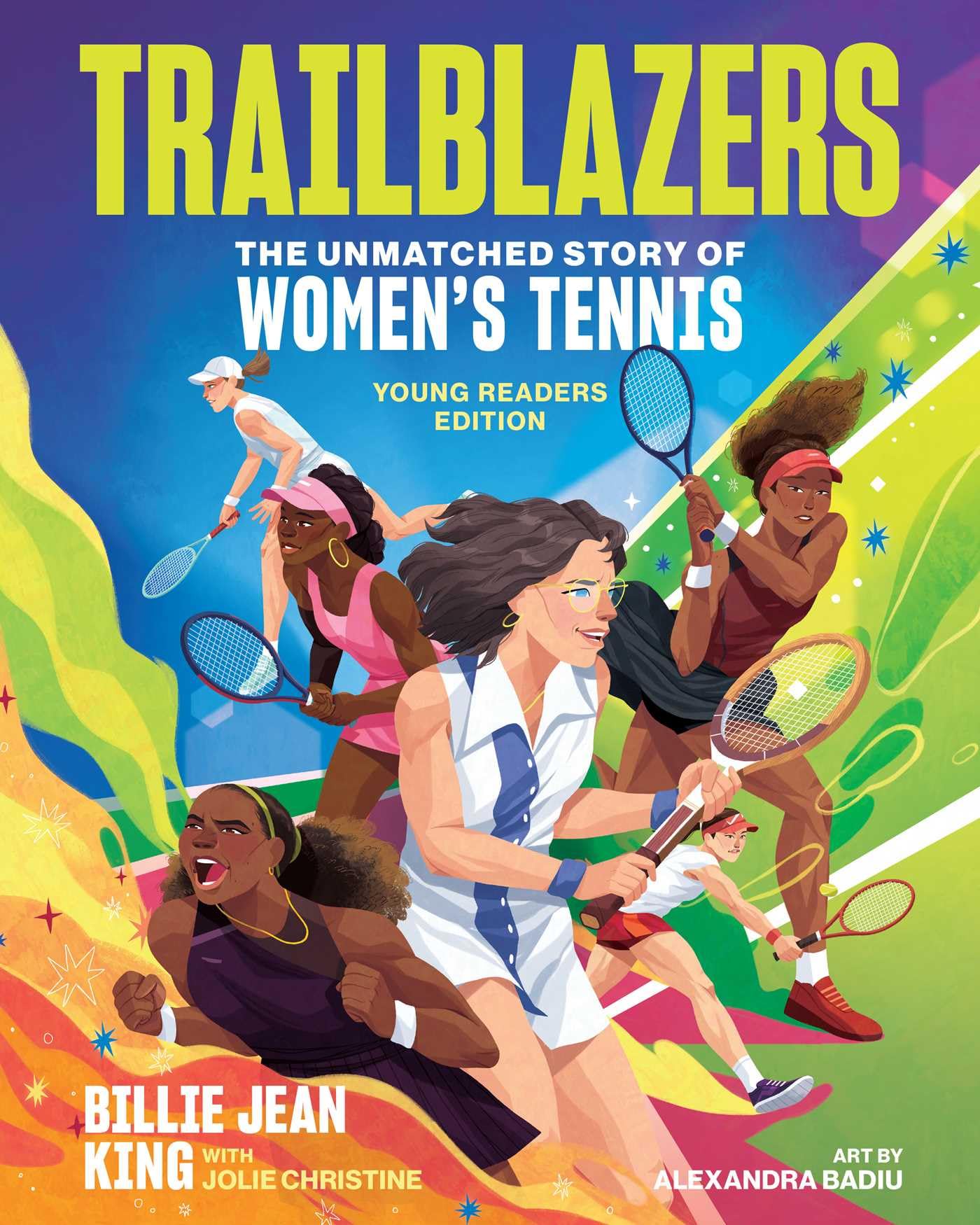
Billie Jean King and Jolie C. Matthews, along with illustrator Alexandra Badiu, have adapted King’s adult history of the sport into Trailblazers: The Unmatched Story of Women’s Tennis, Young Readers Edition. Targeted at the 8-to-12 age bracket, this collection profiles more than twenty women who defined tennis history, ranging from early stars like Suzanne Lenglen to current champions like Iga Swiatek. The book avoids the pitfalls of a dry textbook by organizing information into brief, one-to-two-page entries. This layout is particularly helpful for readers who feel overwhelmed by long blocks of prose, as it allows them to complete a full story in a single sitting. Kirkus Reviews noted that the book effectively balances player statistics with the social shifts they sparked, providing plenty of interesting facts for sports fans. The sentence structure remains simple and direct throughout, ensuring that the focus stays on the athletes’ perseverance. Alexandra Badiu’s vibrant, stylized illustrations act as a visual anchor, helping students who are building their vocabulary to connect the text with the physical intensity and emotional stakes of the sport.
This book shines as a resource for teaching UN SDG 5: Gender Equality and the importance of being a principled risk-taker. It explicitly details how King campaigned for equal pay and founded the Women’s Tennis Association to address the lack of fairness in professional sports. For an educator, this serves as a practical entry point for lessons on advocacy and historical discrimination. You might use the different eras represented to track how social justice movements evolve over time. The visual support of the illustrations allows English language learners to identify key themes of inclusion and fairness without needing to decipher complex academic jargon. In a social studies unit, students could look at King’s advocacy as a template for their own school-based projects, perhaps investigating equality in their local athletic programs or drafting letters to promote fair resources. This book helps students see themselves as potential changemakers who can use their own talents to stand up for what is right. by breaking down complicated systemic issues into personal, human stories,