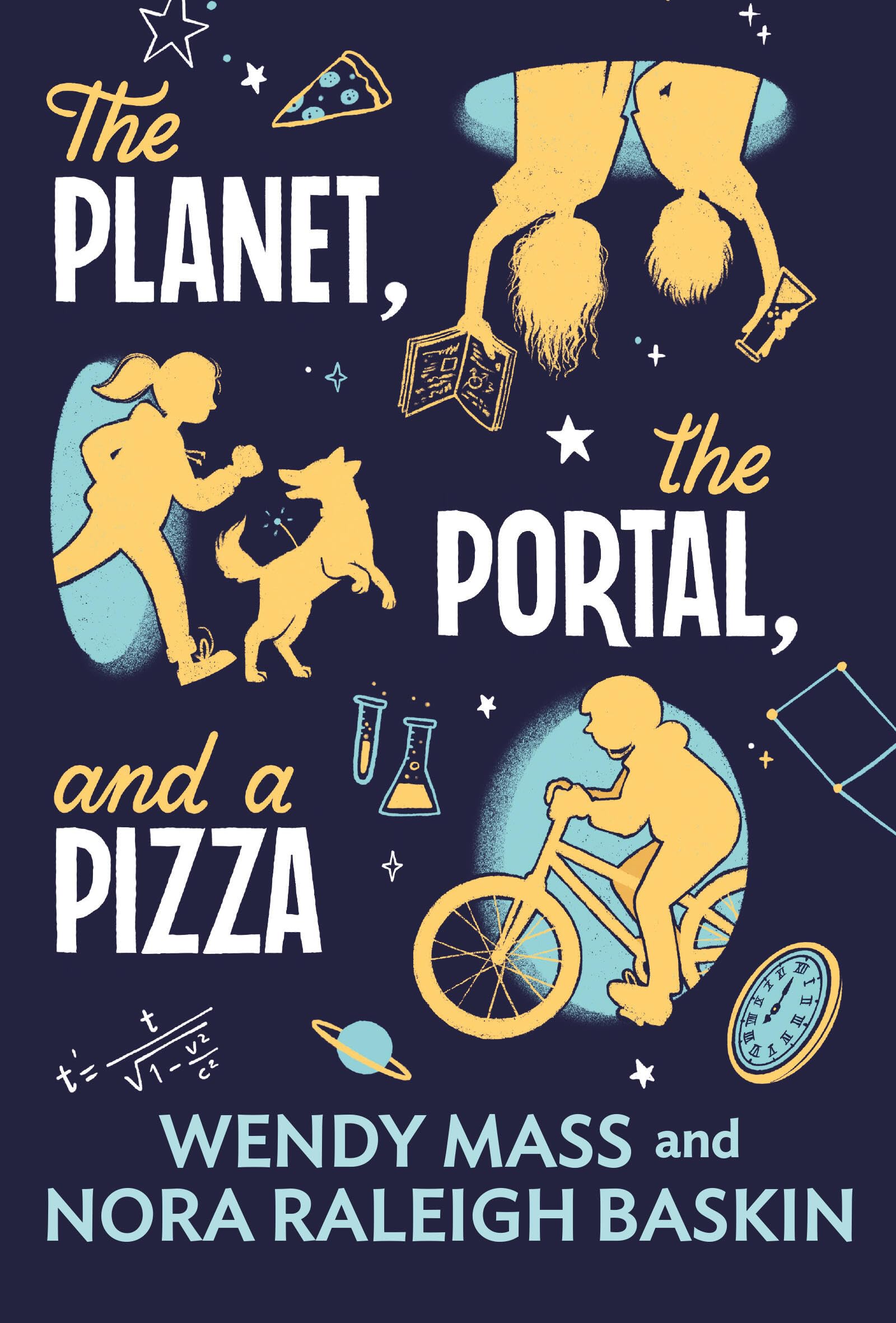
By Wendy Mass and Nora Raleigh Baskin
Is it possible to save an entire civilization before the cheese on your pepperoni slice even gets cold?
In the fast-paced adventure The Planet, the Portal, and a Pizza, author J.R. Sterling blends humor with high-stakes environmentalism through the eyes of thirteen-year-old delivery driver, Sam. While on a routine run, Sam stumbles through a spatial rift and finds himself on the planet Orizon—a world suffering from a catastrophic waste crisis that mirrors our own. Sam and his new Orizonian friend, Pip, must find a way to close the portal while sharing Earth’s recycling strategies to prevent the alien landscape from being buried under mountain-high piles of scrap. Recently honored with the “Interstellar Storyteller Award,” Sterling’s novel uses a lighthearted premise to tackle the very real weight of global waste management and cross-cultural cooperation.
This story serves as a brilliant entry point for educators discussing Sustainable Development Goal 12: Responsible Consumption and Production. Sam’s realization that his own habits on Earth affect the stability of the portal makes him a prime example of the Thinker IB Learner Profile trait, as he has to solve problems that don’t have a manual. A Grade 7 humanities teacher could use the Orizonian waste crisis as a case study for a “trash audit” in the school cafeteria, asking students to design a “portal-proof” waste reduction plan. By framing environmental responsibility through Sam’s frantic but focused efforts, the book highlights how individual choices have a ripple effect across borders—or dimensions. It shows students that being an advocate for the Earth starts with rethinking what we throw away and having the guts to share better ideas with others.