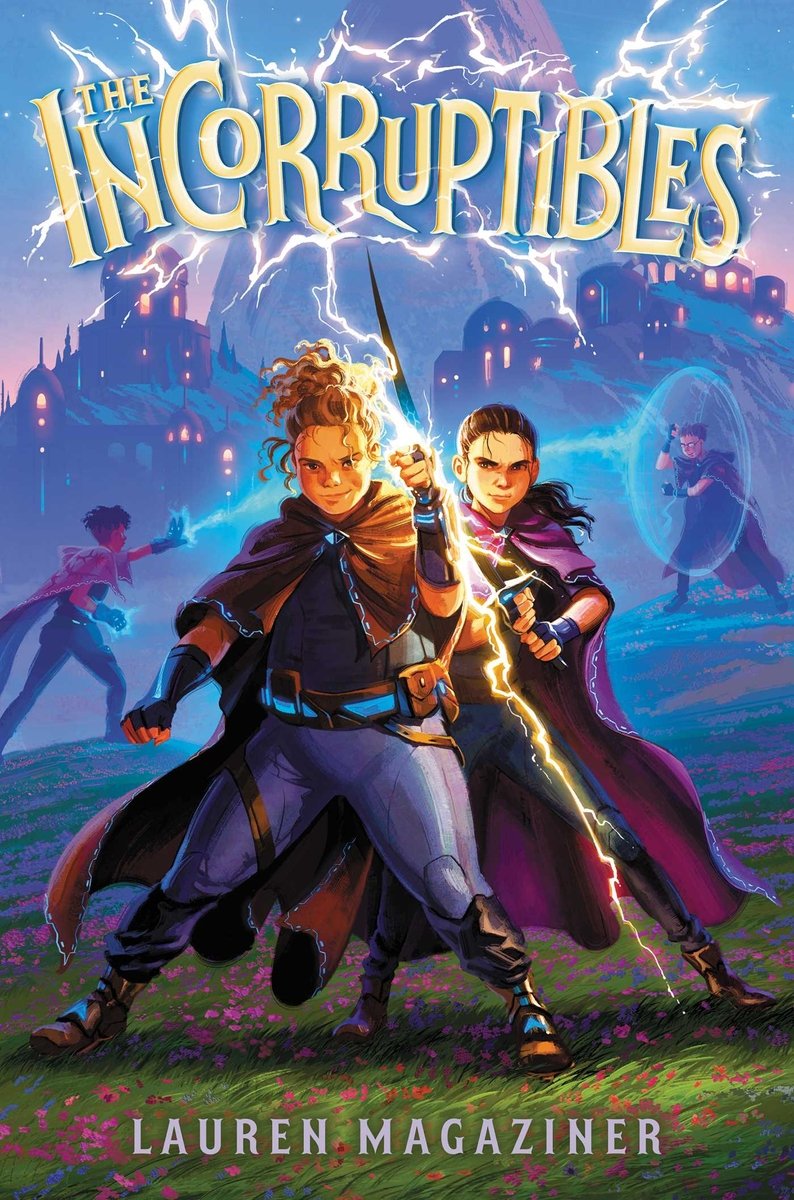
Lauren Magaziner’s The Incorruptibles is a high-stakes futuristic fantasy set a century after sorcerers seized total control of the human world. Thirteen-year-old Fiora Barrowling has spent her life in the shadows as a tailor’s apprentice, haunted by the memory of her parents being murdered by the ruling class. Her life takes a sharp turn when she survives a terrifying encounter with the Radiance—the most dangerous sorcerer of all—and is whisked away to the Inc Academy. This hidden school doesn’t teach standard lessons; it trains the next generation of resistance fighters to take back their freedom. This Kirkus-starred novel follows Fiora as she struggles to earn the trust of her fellow rebels while trying to unmask a spy who threatens to destroy everything they’ve built. Magaziner delivers a suspenseful narrative that has already earned accolades as a Common Sense Media Selection and a spot on Kirkus’ list of best books for young readers.
This story provides an excellent entry point for exploring UN Sustainable Development Goal 16: Peace, Justice, and Strong Institutions. It moves beyond abstract definitions of fairness to show how systematic oppression functions and how organized groups work to dismantle it. For IB educators, Fiora’s development offers a concrete example of what it means to be principled and caring. She chooses to risk her safety not just for personal revenge, but for the collective well-being of her community. In a middle school classroom, teachers could use Fiora’s recruitment into the resistance to anchor a unit on historical justice movements, such as the civil rights movement or the Underground Railroad. Comparing the academy’s training to real-world grassroots organizing helps students see that making a difference requires both individual bravery and strategic cooperation. The book serves as a vivid reminder that student agency starts with the realization that no one has to accept an unjust status quo.