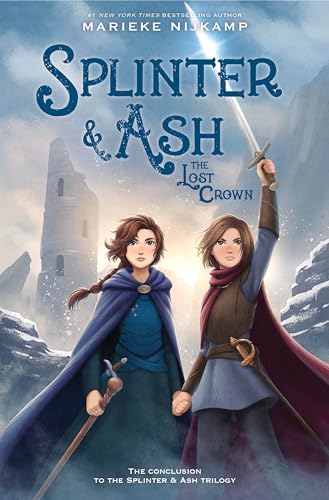
In Marieke Nijkamp’s middle-grade fantasy Splinter & Ash, we meet Princess Adelisa—better known as Ash—a twelve-year-old living in a palace where she feels like a total outsider. While her mother tries to maintain a kingdom fractured by war, Ash deals with a cruel brother and nobles who openly mock her physical disability. Her life takes a turn when she meets Splinter, a fierce, nonbinary girl who has been barred from the knighthood she deserves. Together, they stumble upon a dangerous conspiracy to overthrow the queen, leading to a high-stakes adventure where they are kidnapped and separated. Ash must find a way to save herself while Splinter uncovers deadly secrets to protect the realm. This first book in a trilogy has already earned significant praise, appearing on the 2025 CCBC Choices and Bank Street Best Children’s Books lists, while also being named a finalist for the Lambda Literary Award.
For educators looking to explore UN SDG 10: Reduced Inequalities, this story offers a brilliant entry point. Ash and Splinter don’t just wait for others to change the rules; they push back against the rigid social structures and biases that try to limit them based on gender or physical ability. It is an excellent tool for introducing students to the IB Learner Profile trait of being principled, as both characters must choose the right path even when it goes against every tradition in their realm. In a social studies unit, their journey could be used to spark a project comparing the kingdom’s power dynamics to modern disability rights movements or gender identity advocacy. By seeing Ash lead and outsmart her enemies despite the mockery of others, students get a clear picture of how agency works. This narrative helps move the classroom conversation from abstract ideas of fairness to the concrete ways young people can challenge the status quo and demand equity in their own communities.