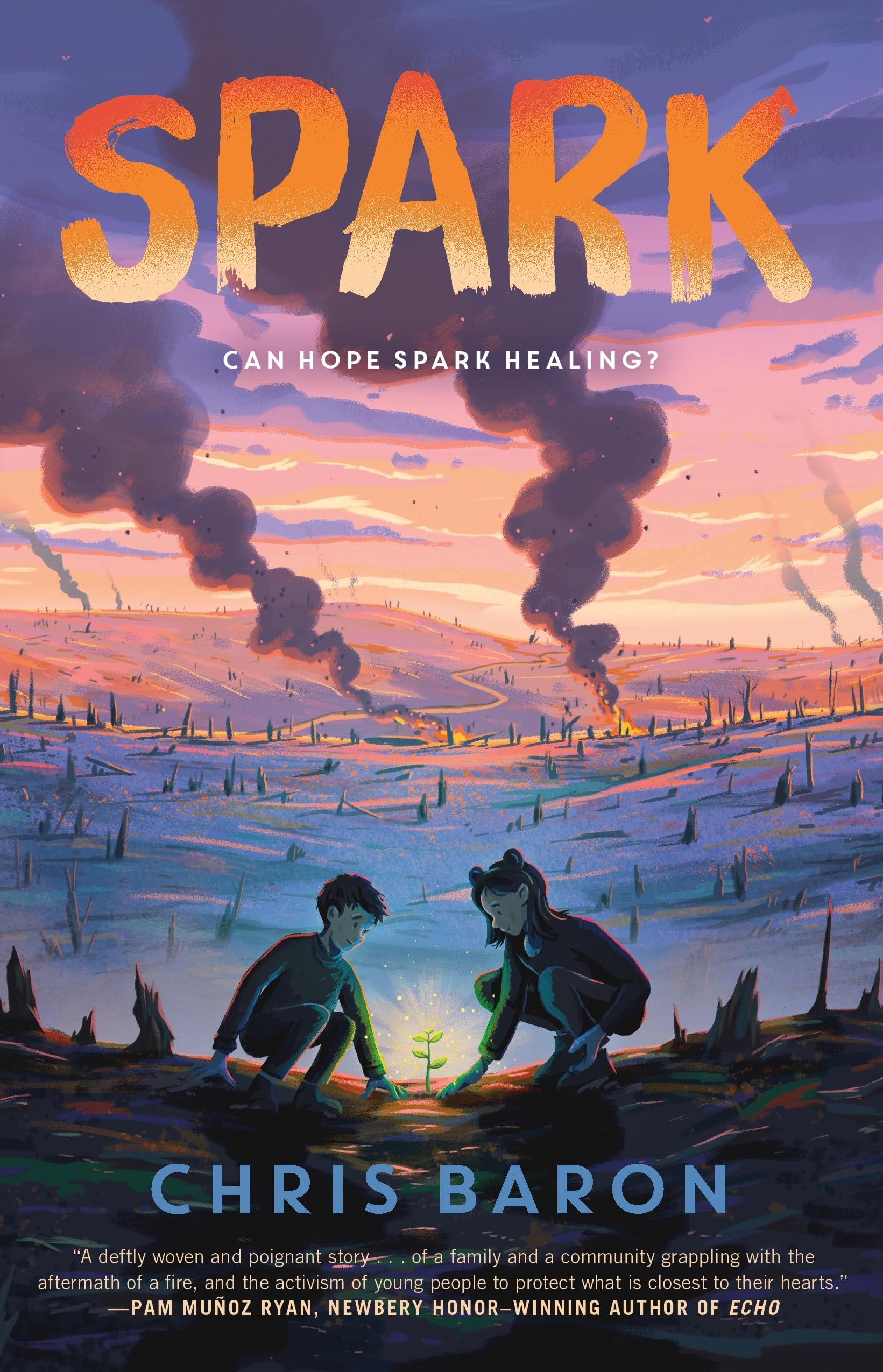
Chris Baron’s Spark is a middle-grade novel-in-verse that captures the raw uncertainty of life after a natural disaster. Aimed at readers between ages 8 and 12, the story follows Finn and his friend Rabbit as they return to their Northern California home following a devastating wildfire. While their community struggles to rebuild, Finn deals with the quiet, heavy burden of trauma and the realization that the forest isn’t regenerating as it should. The tension rises when the boys find evidence that a construction project—one involving Finn’s own father—might be responsible for the disaster. Baron, an author already celebrated for award-winning titles like The Magical Imperfect, delivers a story that has earned multiple starred reviews for its emotional depth and quick pacing. For teachers looking to support students who find thick blocks of prose intimidating, this book is an ideal choice. The verse format uses short lines and plenty of breathing room on the page, allowing the plot to move with a quick, propulsive energy. The language is direct and clear, meaning reluctant readers can focus on Finn’s emotional growth rather than getting tripped up by complex sentence structures.
Spark serves as a clear entry point for discussing environmental stewardship and UN Sustainable Development Goal 15: Life on Land. Finn and Rabbit don’t just watch the destruction; they take tangible steps to protect the “forest heart,” a small patch of surviving growth essential for the ecosystem’s future. By documenting wildlife and advocating for the land even when it means challenging adults, the characters model the IB Learner Profile attribute of being caring. In a classroom setting, this narrative provides a natural connection to science lessons on ecology or social studies units on community planning. You might have students use the boys’ methods—such as documenting local wildlife return or researching habitat restoration—to start a conversation on how to balance local economic needs with environmental protection. Because the verse structure keeps the reading level approachable, even students still building English proficiency can dive into these sophisticated debates about climate change and civic responsibility. It is a rare find that manages to treat a child’s agency with such respect while keeping the actual reading experience manageable. This story gives students a practical blueprint for how to find their own voices when they see something in their world that needs fixing.