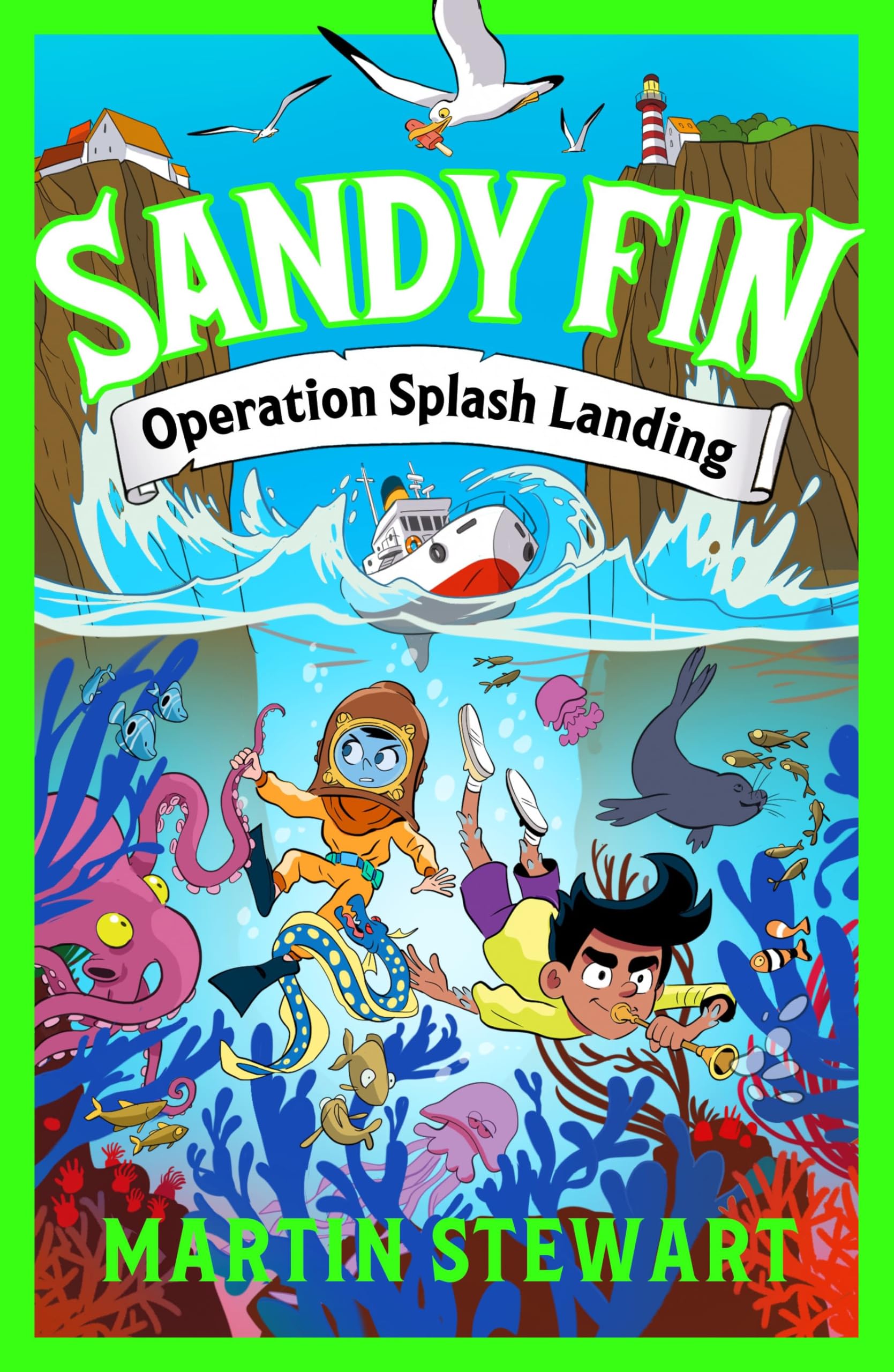
Martin Stewart, a former English teacher who clearly understands how to hook a young audience, delivers a high-energy eco-adventure in Sandy Fin: Operation Splash Landing. This middle-grade debut features Sandy Fin, a silver-scaled explorer living in the Museum of Seaside Stories, and his sharp-witted best friend Lily. Together, they face off against Albo Start, a man determined to turn their beloved local museum into a marine-life prison called Splash Landing. To save the ocean’s inhabitants, the pair must embark on a quest for the fabled Golden Lobster treasure, relying on their wits and a heavy dose of ocean-rescue spirit. While Stewart’s previous work has earned spots on the Kirkus Best Books list and the Branford Boase shortlist, this new series is already earning praise for its “fast-paced, fun, and warm” tone. Santy Gutierrez’s illustrations further bring this nautical world to life, making the stakes feel both urgent and accessible for readers aged nine and up.
For educators building a collection focused on global citizenship, this book provides a concrete link to UN Sustainable Development Goal 14: Life Below Water. Sandy and Lily don’t just hope for change; they organize and act to prevent the exploitation of marine life. This makes the story a fantastic resource for illustrating IB Learner Profile traits of being principled or caring. Teachers can use the museum-saving plot to anchor a Grade 4 or 5 unit on how small communities can influence environmental policy. For example, a classroom activity could involve students creating their own advocacy posters for local habitats, mimicking the museum’s mission. The narrative helps move the concept of environmentalism away from abstract science and toward personal responsibility. By showing how these characters use their ingenuity to outsmart Albo Start, Stewart offers a clear example of how young people can assert their agency when their world—and the wildlife in it—is under threat.