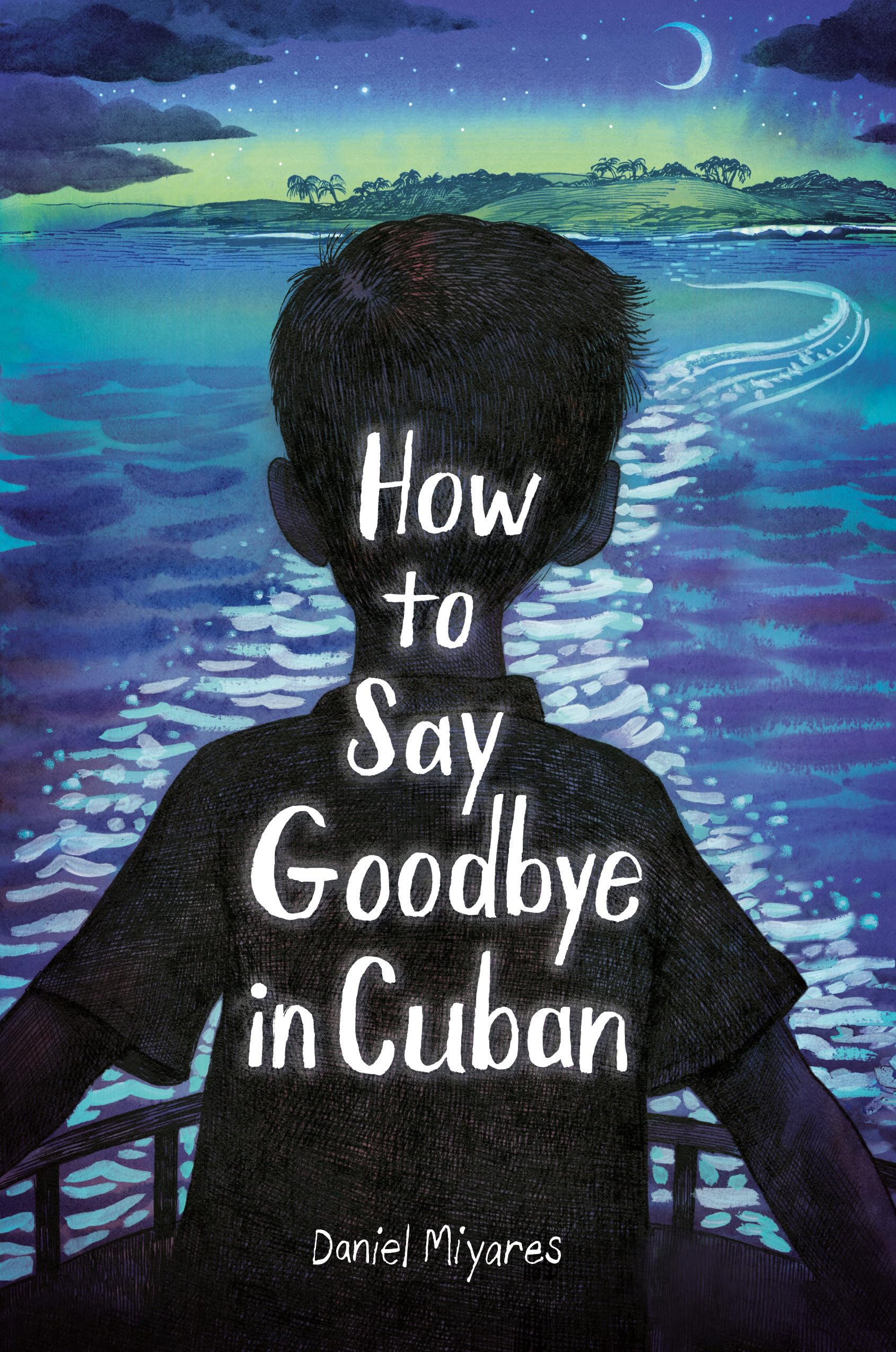
A young boy’s island home transforms from a tropical paradise into a landscape of revolution and difficult goodbyes.
How to Say Goodbye in Cuban, by Daniel Miyares is a poignant graphic memoir for middle-grade readers that recounts the true story of his father’s childhood. The narrative follows young Carlos as his quiet life in rural Ceiba Mocha is upended by the sudden shifts of the Cuban Revolution. When his family moves to the city after a lucky lottery win, their initial excitement is quickly overshadowed by the rise of Fidel Castro’s government. Carlos witnesses his community fracture under the weight of new laws and shifting loyalties, eventually leading to a painful journey toward the United States. This book is a standout choice for students who might feel intimidated by long chapters of traditional historical fiction. The story unfolds through a mix of vibrant watercolor panels and stark, monochrome snapshots of historical events, which helps clarify the timeline and emotional stakes for the reader. Miyares uses short, direct sentences in the dialogue that mirror the way a child processes massive world changes, making the text very approachable for English language learners or those building reading stamina. With starred reviews from both Kirkus and Booklist, it is clear this memoir is as artistically significant as it is easy to pick up and read.
As well as having immense visual appeal, this book serves as a vital tool for exploring SDG 16: Peace, Justice, and Strong Institutions. By centering on Carlos’s lived experience, the story puts a human face on the concept of systemic injustice and the displacement that often follows political instability. In a classroom setting, teachers can use this narrative to explore IB Learner Profile attributes like risk-taking. The graphic format is particularly useful here; the visual cues allow students to grasp the gravity of life under a revolution even if they haven’t yet mastered complex political vocabulary like “communism” or “exile.” Educators could lead a session comparing these illustrated scenes with historical accounts of the period, or invite students to create their own storyboards reflecting on themes of freedom and home. Ultimately, this memoir provides a way for young readers to grapple with heavy global issues through a lens that is both gentle and honest, helping them see how individuals survive and adapt to a changing world.