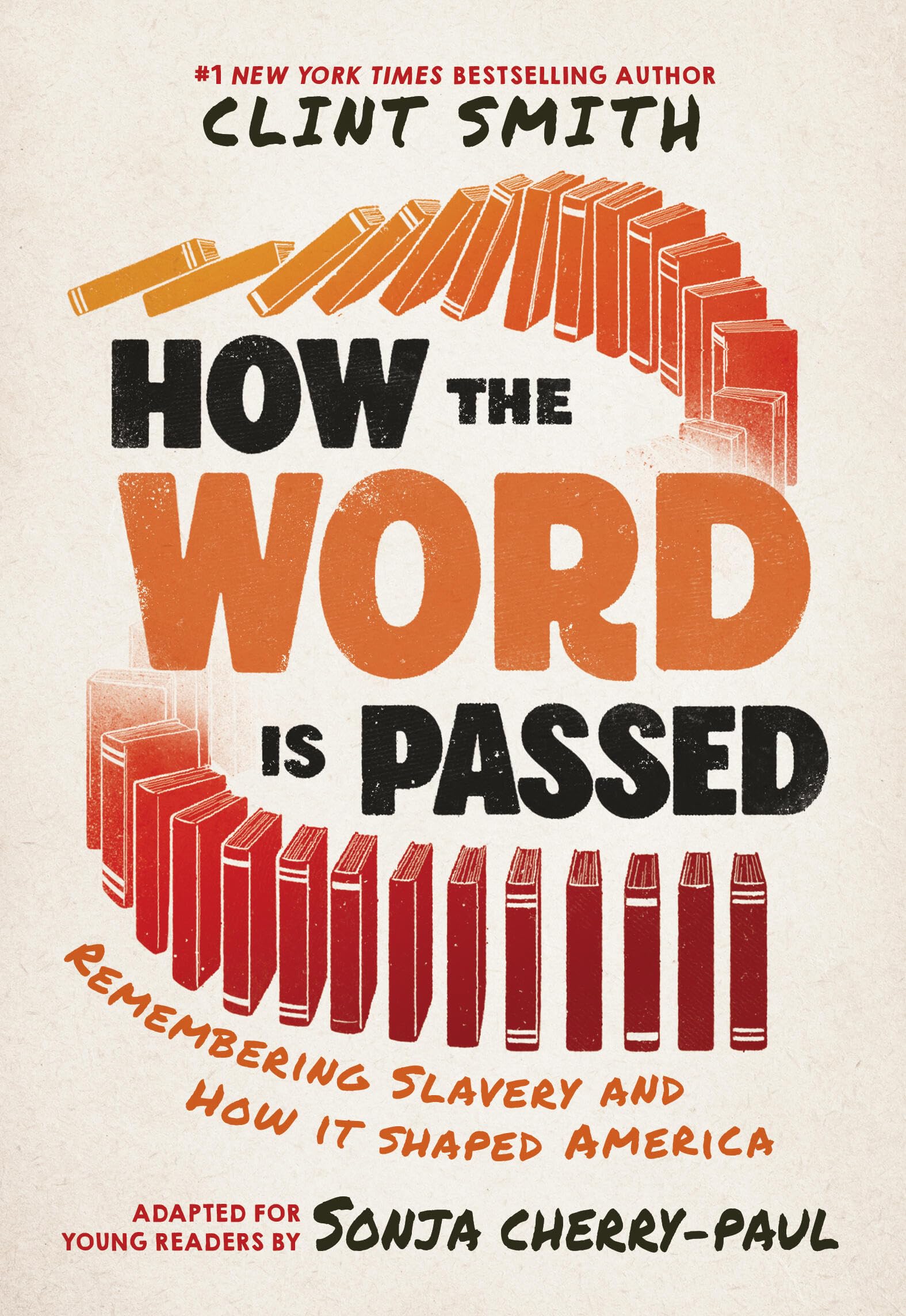
Every statue and historical marker tells a story—but whose story is being left out?
In this nonfiction adaptation for middle-grade and young adult readers, award-winning poet and scholar Clint Smith takes us on a road trip to places we might think we already know. From the rows of the Whitney Plantation and the halls of Monticello to the cells of Angola Prison and the shores of Gorée Island, Smith examines how the United States remembers and often misinterprets the history of slavery. This version of his National Book Critics Circle Award-winning work is specifically crafted for younger students, using photographs and maps to help ground these complex conversations in real-world locations. By visiting these sites, Smith doesn’t just list names and dates; he challenges the sanitized versions of the past that frequently show up in standard textbooks. The result is a grounded, lyrical exploration of public memory that earned starred reviews from Kirkus and Booklist for its clarity and educational depth.
This book is an essential pick for any collection focused on building social awareness, as it aligns directly with the United Nations goal of Reduced Inequalities (SDG 10). For educators, the text serves as a practical tool to help students become more reflective and open-minded, which are key traits in the IB Learner Profile. Instead of just talking about fairness in a vacuum, Smith’s investigative style provides a blueprint for a class inquiry into fairness in local history. For example, a teacher could use the comparison between the memorialization at Monticello and the Whitney Plantation to spark a debate on how different stories of freedom are told. Students could then take this a step further by researching a nearby landmark to see if its public plaque tells the whole truth. By showing that history is something we actively choose to remember or forget, Smith gives students the agency to ask better questions about the world around them. It helps take them from being a passive consumer of facts into an active investigator of their own community’s narrative.