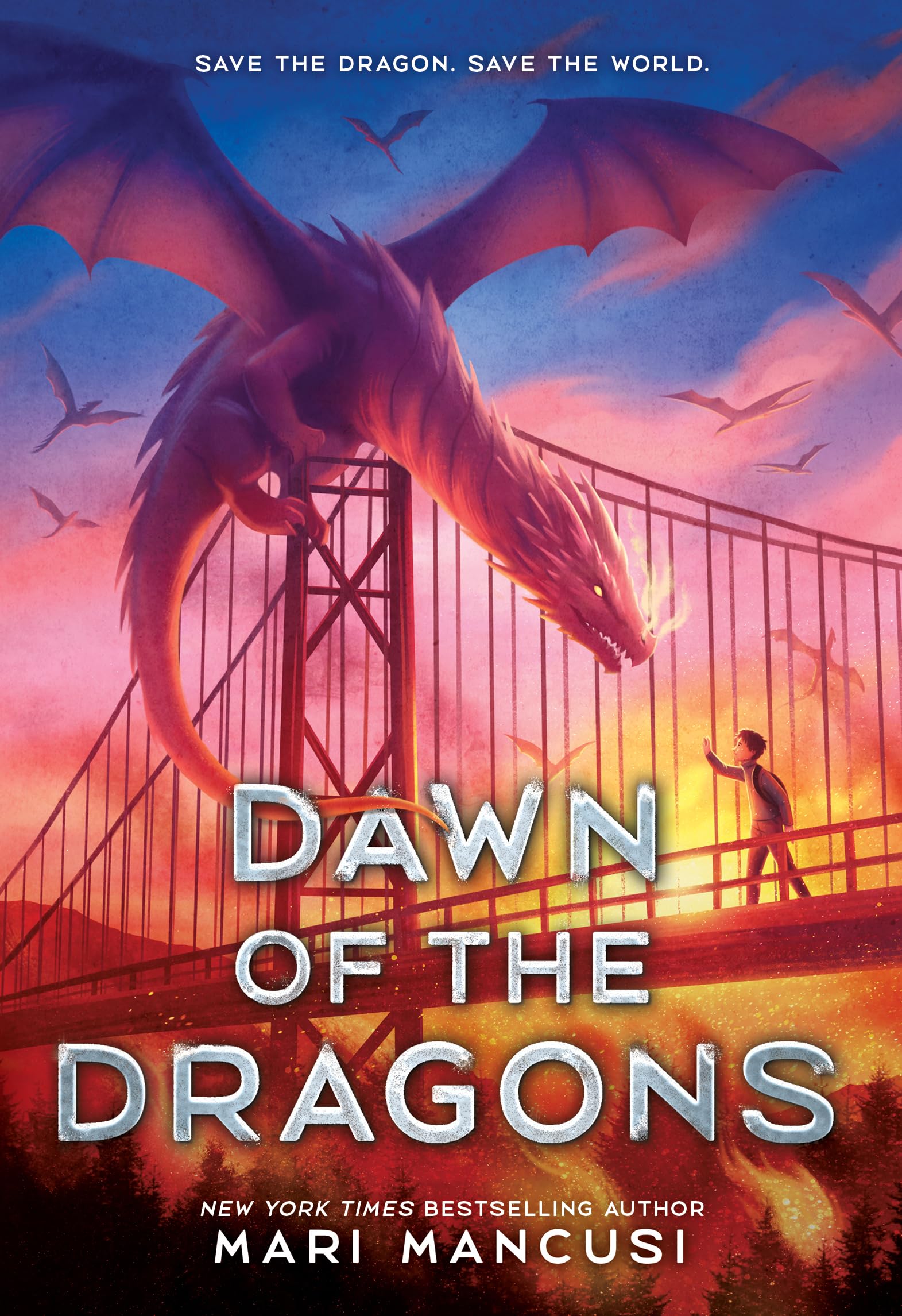
What if the smoke choking your city isn’t from a forest fire, but from a species we thought was extinct?
Mari Mancusi, a New York Times bestselling author and Emmy Award-winning producer, dives back into the world of her celebrated New Dragon City series with this high-stakes prequel. Dawn of the Dragons is a middle-grade dystopian adventure that finds twelve-year-old Lucas stuck at home during a summer of strange environmental shifts. Mysterious fires have made the air unsafe to breathe, and while the adults around him are caught up in conspiracy theories, Lucas discovers the terrifying truth: dragons are real, and they are waking up. When he finds an injured dragon named Cinder, the two form an unexpected bond that challenges the fear-driven narratives of their respective worlds. While the series has already garnered accolades like the Florida SSYRA Sunshine State Readers Award, this origin story provides a grounded, personal entry point into a world facing a massive ecological shift.
This story is an excellent anchor for discussions surrounding UN SDG 13: Climate Action. The premise—that dragons are returning because the Earth’s temperatures are rising—turns the climate crisis into a tangible, high-stakes narrative that middle-schoolers can easily grasp. It pushes students to think about the IB Learner Profile trait of being open-minded, as Lucas and Cinder work to overcome the deep-seated misunderstandings between their species. In the classroom, an educator might use the human-dragon conflict as a case study for a Grade 6 unit on conflict resolution, asking students to identify how miscommunication escalates environmental disputes. By showing a protagonist who refuses to accept “us versus them” thinking, the book offers a clear path for students to see themselves as active problem-solvers. It suggests that solving global issues starts with the courage to question the status quo and the empathy to see a situation through someone else’s eyes.