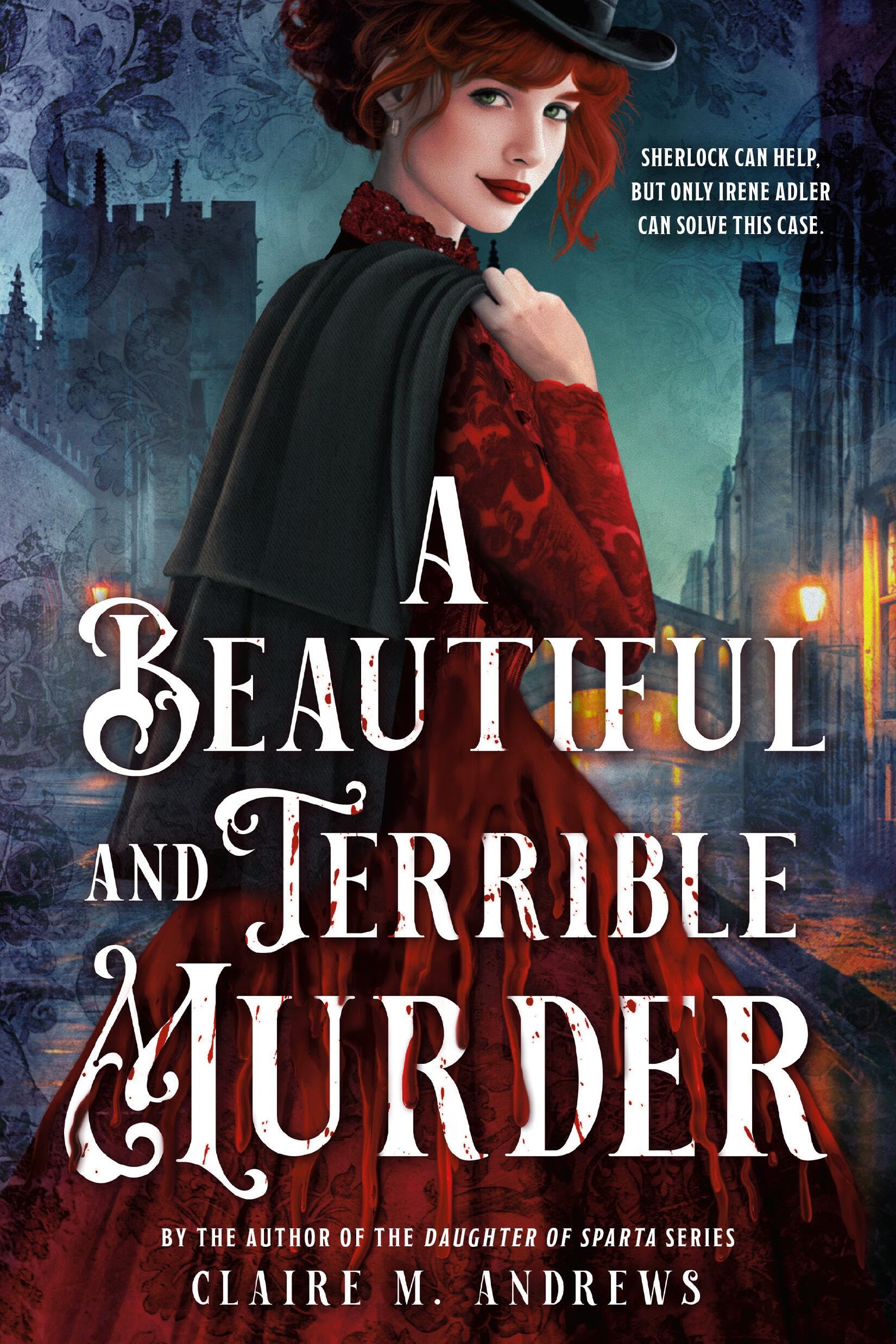
Claire Andrews delivers a gripping historical mystery in A Beautiful and Terrible Murder, launching a new series centered on a young Irene Adler. In 1872 Oxford, the rules for women are strict, but Irene is determined to break them. She maintains an exhausting double life, attending Lady Margaret College while also disguising herself as “Isaac Holland” to infiltrate the male-only halls of All Souls College. Her academic pursuits take a dark turn when students in her elite cohort start dying in mysterious ways. Forced into an unlikely partnership with her classmate Sherlock Holmes, Irene has to solve the murders while keeping her true identity a secret from a suspicious university. The book has already gained significant traction with professional reviewers; School Library Journal praised Irene as a smart and engaging lead, while Kirkus Reviews highlighted the story’s action-packed energy. It is a dense, 432-page mystery that manages to feel both intellectual and urgent.
This title is a natural fit for any collection focusing on UN SDG 5: Gender Equality. Irene’s character does not just represent the desire for fairness; she embodies the active struggle to dismantle educational barriers. Her choice to disguise herself to access a world-class education provides a concrete example of someone taking a stand against systemic bias. In a classroom, an educator could use this narrative to anchor a history project comparing the Victorian-era fight for suffrage with modern global gaps in girls’ education. By discussing Irene’s dual identity, students can explore the lengths marginalized groups often go to just to find an equal footing. The book encourages student agency by showing that progress usually starts with an individual who refuses to let an unfair system define their potential. It is a compelling look at how education itself can be an act of rebellion.