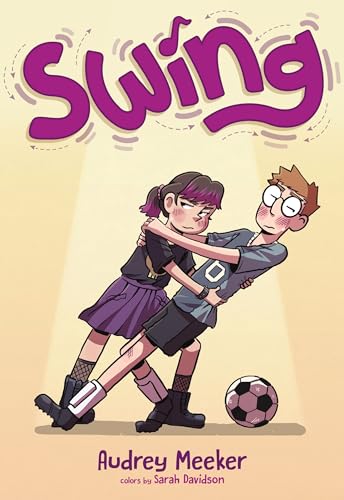
One gym project and an unexpected dance partner might be exactly what Marcus needs to find his own rhythm.
Audrey Meeker’s graphic novel Swing introduces us to Marcus McCalister, a middle schooler who feels the constant weight of fitting into the “soccer star” mold despite his total lack of passion for the sport. When a gym assignment pairs him with the eccentric and bold Izzy Briggs for a swing dancing project, Marcus finds himself in a world far removed from the soccer field. To save their grades, the two decide to perform for the school talent show, but they decide on a nontraditional arrangement: Izzy takes the lead, and Marcus learns to follow. This story, geared toward the 8-to-12 age range, has already gained recognition from the Great Lakes Great Books Award for its relatable portrayal of middle school social dynamics and self-acceptance. For students who find thick, prose-heavy novels offputting, this book acts as an excellent entry point. Meeker’s artwork and Sarah Davidson’s colors use vibrant panels and expressive character faces to convey emotional shifts that aren’t always explicitly written in the text. The dialogue consists of short, punchy sentences, making the story manageable for those still building their reading stamina. The dance steps and social tensions are shown visually so readers can follow the narrative flow and pick up on the humor without getting lost in dense descriptive passages.
Beyond the fun of the dance competition, Swing provides a clear path for discussing gender equality and breaking down social stereotypes, aligning closely with SDG 5. By having Izzy lead the dance, Meeker prompts students to question why certain roles are traditionally assigned to certain genders. It is a fantastic tool for helping kids see that they don’t have to stick to a script written for them by their peers or society. In the classroom, this graphic novel could be useful for sparking a conversation about the pressure to conform and how Marcus eventually chooses his own path over the expectations of the soccer team. For instance, teachers might have students analyze specific panels to see how Marcus’s body language changes as he gains confidence, or use the story to prompt a creative writing piece about a time they stood up for their own interests. The accessibility of the graphic novel format is particularly helpful in these scenarios; it allows English language learners to use visual cues to understand complex social interactions like bullying or peer pressure. This ensures that every student, regardless of their reading level, can participate in meaningful discussions about identity and agency. Ultimately, Marcus and Izzy’s story shows that when students have the right support, they can find the courage to step out of the shadows and advocate for who they truly are.