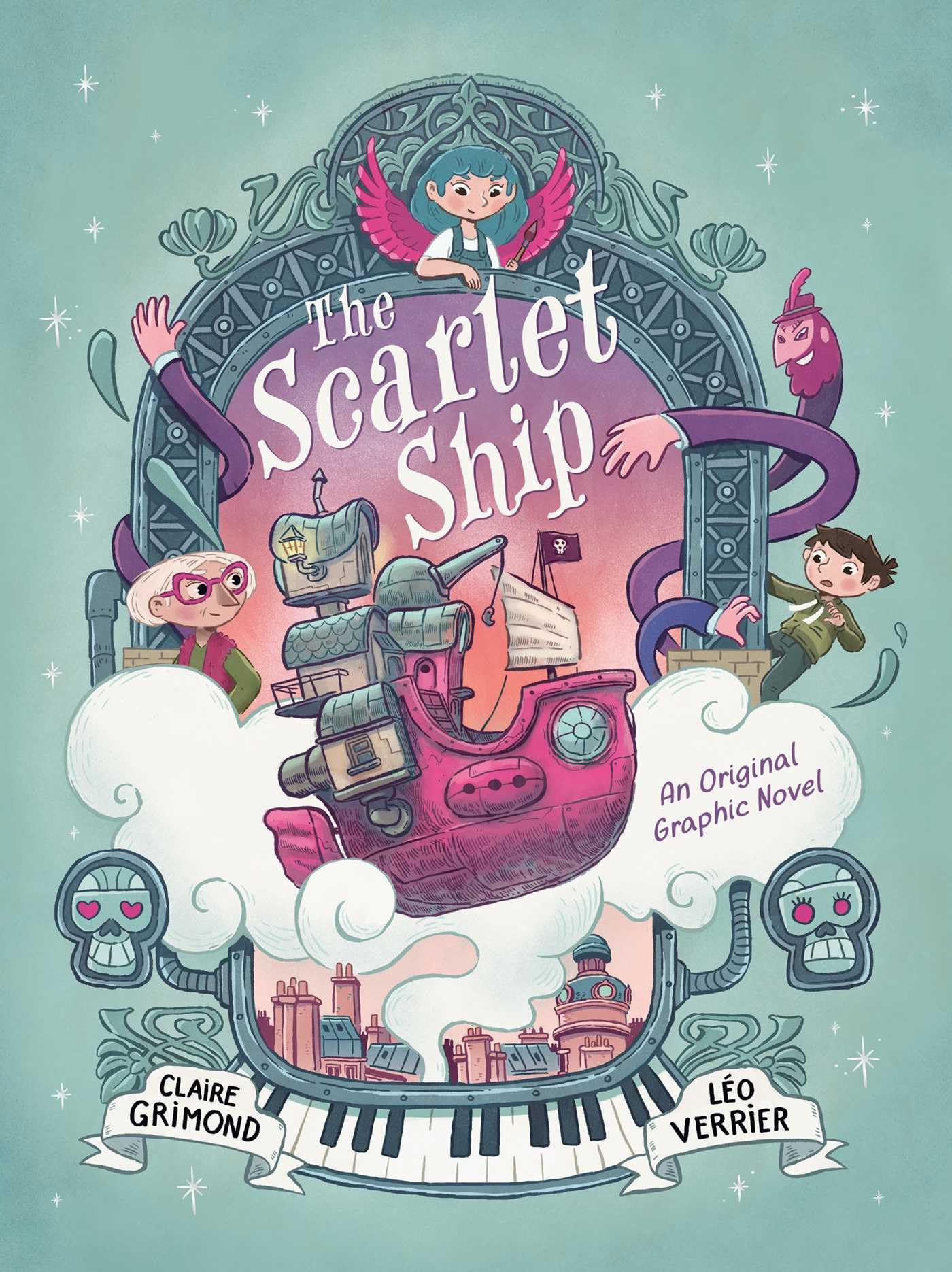
The Scarlet Ship, by the creative duo of Claire Grimond and Léo Verrier, is a standalone graphic novel for middle-grade readers that captures the whimsy and wonder of a Studio Ghibli production. We meet Malo, a twelve-year-old traveling with his grandmother, the celebrated artist Madame Zita. Their world is turned upside down when they encounter “art pirates” aboard a magnificent flying vessel. These antagonists, commanded by the ruthless Captain Magenta, seek to hoard or erase the world’s beauty for their own gain. For students who struggle with reading confidence, this book is an ideal bridge. The narrative relies on vivid, full-color panels that communicate emotional shifts and action sequences better than prose alone could. Grimond uses straightforward dialogue bubbles that prevent the reader from feeling buried under heavy descriptions, while Verrier’s inclusion of technical cross-sections and maps helps clarify the steampunk-inspired setting. Having earned high marks from professional reviewers, it is a verified hit for those who need a lower-difficulty text that does not compromise on imaginative depth or visual sophistication.
Teachers can leverage this adventure to explore UN SDG 4 regarding Quality Education and the IB Learner Profile attributes of being a thinker and communicator. The plot focuses on the idea that art and inspiration should be shared rather than locked away, providing a clear entry point into discussions about intellectual freedom and the democratization of culture. In the classroom, Malo’s growth could be used to spark an art and advocacy project where students create works that address community issues. Because the visual cues are so intentional, English language learners can join these sophisticated conversations about the value of creativity without getting lost in difficult vocabulary. The story treats Malo’s development not just as a coming-of-age trope, but as a lesson in using one’s voice to challenge oppression. By presenting these mature themes through an accessible graphic format, the book helps students build reading stamina while simultaneously encouraging them to see themselves as active agents of change in their own communities. It turns a fantastical pirate chase into a meaningful reflection on why protecting our shared creative history matters.