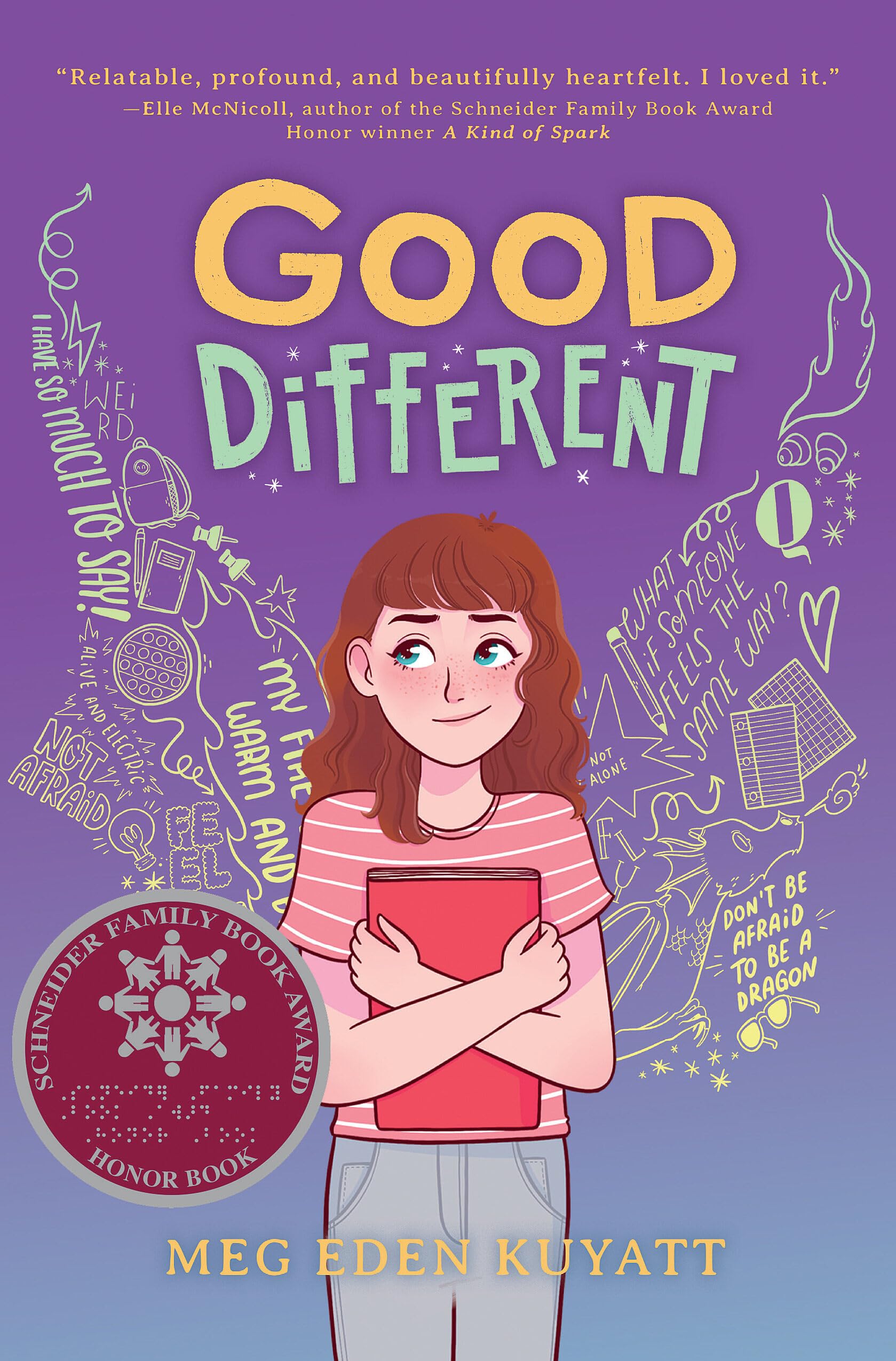
In Good Different, Meg Eden Kuyatt introduces us to Selah, a seventh-grader who follows her “rules for being normal” to navigate the pressures of middle school. This novel in verse explores Selah’s life as an undiagnosed autistic student who eventually learns that her sensory processing needs and unique perspectives aren’t flaws to be hidden, but a vital part of who she is. For educators looking for “bridging” material, the verse format is a significant asset; the short lines and ample margins provide a high-interest, low-barrier entry point for students who struggle with reading stamina. The language is clear and evocative, using concrete imagery rather than complex idioms, which helps English language learners and reluctant readers grasp Selah’s internal world without getting lost in dense prose. This accessibility, paired with the book’s recognition as a Schneider Family Book Award Honor title, makes it a reliable choice for diverse classrooms.
As a “Changemaker” read, this book aligns perfectly with SDG 10: Reduced Inequalities and fosters the IB Learner Profile trait of being self-aware. Selah’s journey is a blueprint for student agency, moving from forced assimilation to self-advocacy. In a classroom, a teacher might use Selah’s “rules” as a starting point for a discussion on neurodiversity and school culture. Because the text is so approachable, students with different linguistic backgrounds can participate in deep conversations about how schools can be redesigned to be more inclusive. The book demonstrates that when we stop asking students to mask their differences, we create a community where everyone can contribute. By highlighting the courage it takes to demand necessary accommodations, Good Different gives students the vocabulary to advocate for themselves and their peers, turning a personal story of discovery into a collective lesson on empathy and systemic change.