By Melissa Dassori and Dana SanMar
What happens to a community when the news is “perfect” but the truth is a lie?
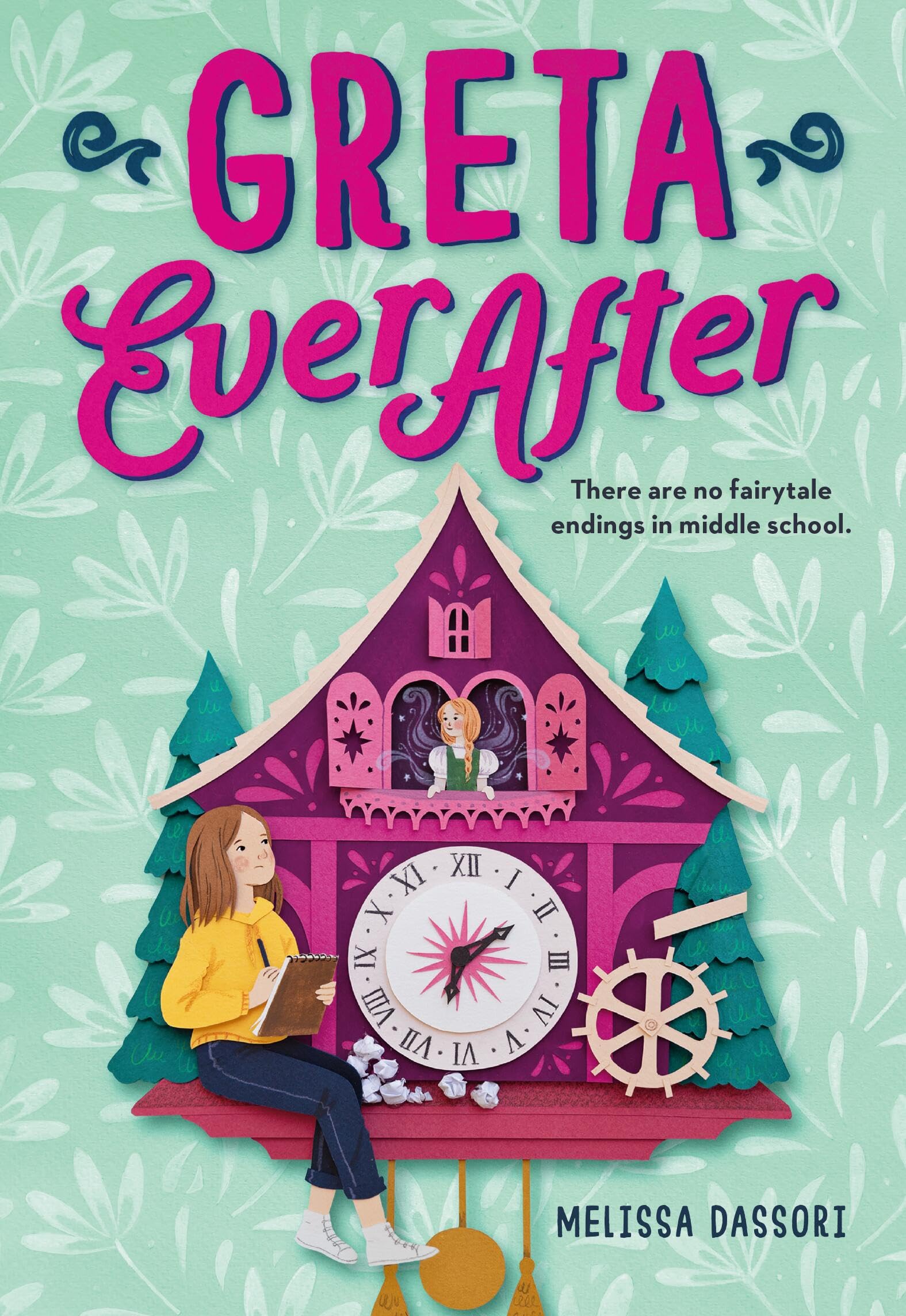
Melissa Dassori’s Greta Ever After is a middle grade novel that blends a relatable school setting with a touch of dark magic. Twelve-year-old Greta Starr wants to be a star reporter, but she is stuck writing for the most boring beat on her school newspaper. Things take a turn on her birthday when a wooden dancer from a mysterious cuckoo clock named Lulu comes to life. Lulu encourages Greta to “engineer” feel-good stories around campus, manufacturing happy endings that quickly boost Greta’s popularity and social standing. However, the sparkle of these fabricated scoops starts to fade when the reality of her choices begins to threaten her friendships. Greta soon finds that no amount of magic can fix the fallout caused by a lack of honesty. Published by Christy Ottaviano Books and featuring black-and-white illustrations by Dana SanMar, this standalone story has earned a Junior Library Guild Gold Standard selection and high praise from professional reviewers for its clever fairy-tale elements and authentic portrayal of seventh-grade life.
This book is a standout choice for educators focusing on media literacy and UN Sustainable Development Goal 16: Peace, Justice, and Strong Institutions. It moves beyond telling kids to be honest; it shows how truthful information serves as the backbone of a fair and transparent society. Greta’s arc provides a clear example of what the IB Learner Profile trait of being principled is, as she must decide if her personal reputation is worth more than her integrity as a journalist. In a classroom, Greta’s mistakes could be used to start a media literacy investigation where students analyze different news sources to identify the difference between fact and manufactured opinion. This narrative helps students see themselves as responsible information-sharers who have a duty to their community. By the end of the book, Greta discovers that real change comes from facing unwelcome realities rather than hiding behind a convenient fiction. It is a fantastic tool for inspiring student agency, proving that even a middle school reporter can help build a more just world by simply choosing the truth.