Can a boy who prides himself on doing it all alone learn that asking for help is the ultimate show of strength?
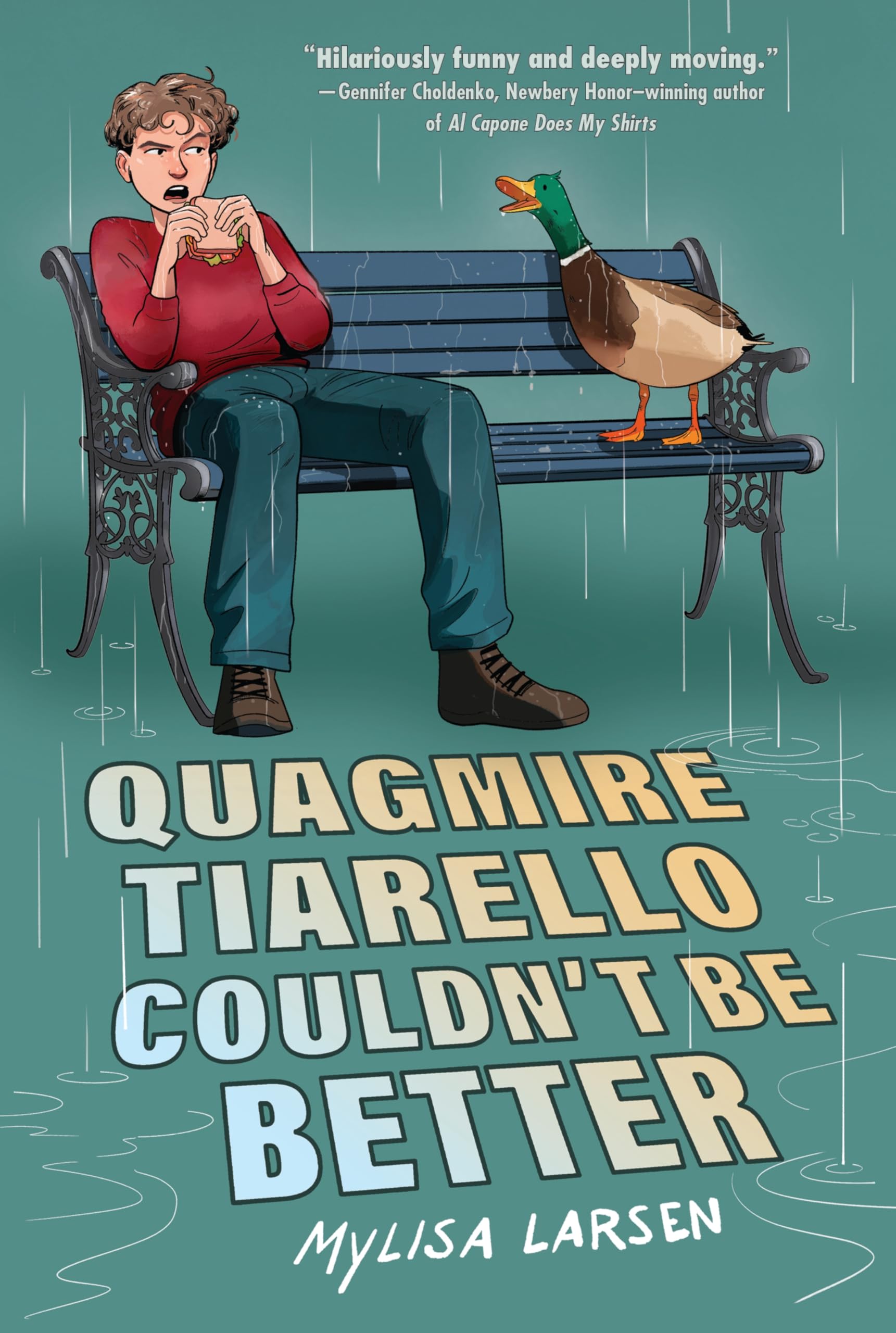
In the middle-grade novel Quagmire Tiarello Couldn’t Be Better, author Mylisa Larsen creates a story that balances heavy emotional weight with a necessary dose of humor. The book has quickly become outstanding in contemporary fiction, earning five starred reviews and being named a Best Book of the year by both Publishers Weekly and Kirkus Reviews. The story centers on Quag, a kid who is an expert at acting as though everything is fine, even when his mother’s bipolar disorder makes home life completely unpredictable and challenging. When his mother eventually hits a breaking point and abandons him on the side of a road, Quag finds himself living with an uncle he has no history with. The narrative tracks Quag’s internal struggle as he tries to maintain his mask of independence while slowly realizing that his survival depends on letting people in. It is a grounded, honest look at the realities of abandonment and the complicated nature of found family.
This book is a superb addition to any library focused on social-emotional learning or global health initiatives. Specifically, it aligns with SDG 3: Good Health and Well-being by destigmatizing the conversations around mental illness and the burden it often places on young caregivers. Educators can use Quag’s journey to disdcuss the IB Learner Profile traits of being reflective and caring. Instead of seeing these traits as abstract concepts, students see them in action as Quag stops hiding and starts connecting with those around him. A teacher might use this story to spark a classroom initiative where students research and present on local mental health resources or create journals that explore how their own perspectives on “strength” change throughout the reading. When Quag decides to finally allow himself to be vulnerable, he shows students that leadership can look like having the courage to speak the truth and build a culture where nobody has to struggle alone. It underscores the idea that taking action doesn’t always mean a grand protest; sometimes, it starts with the bravery to ask for support.