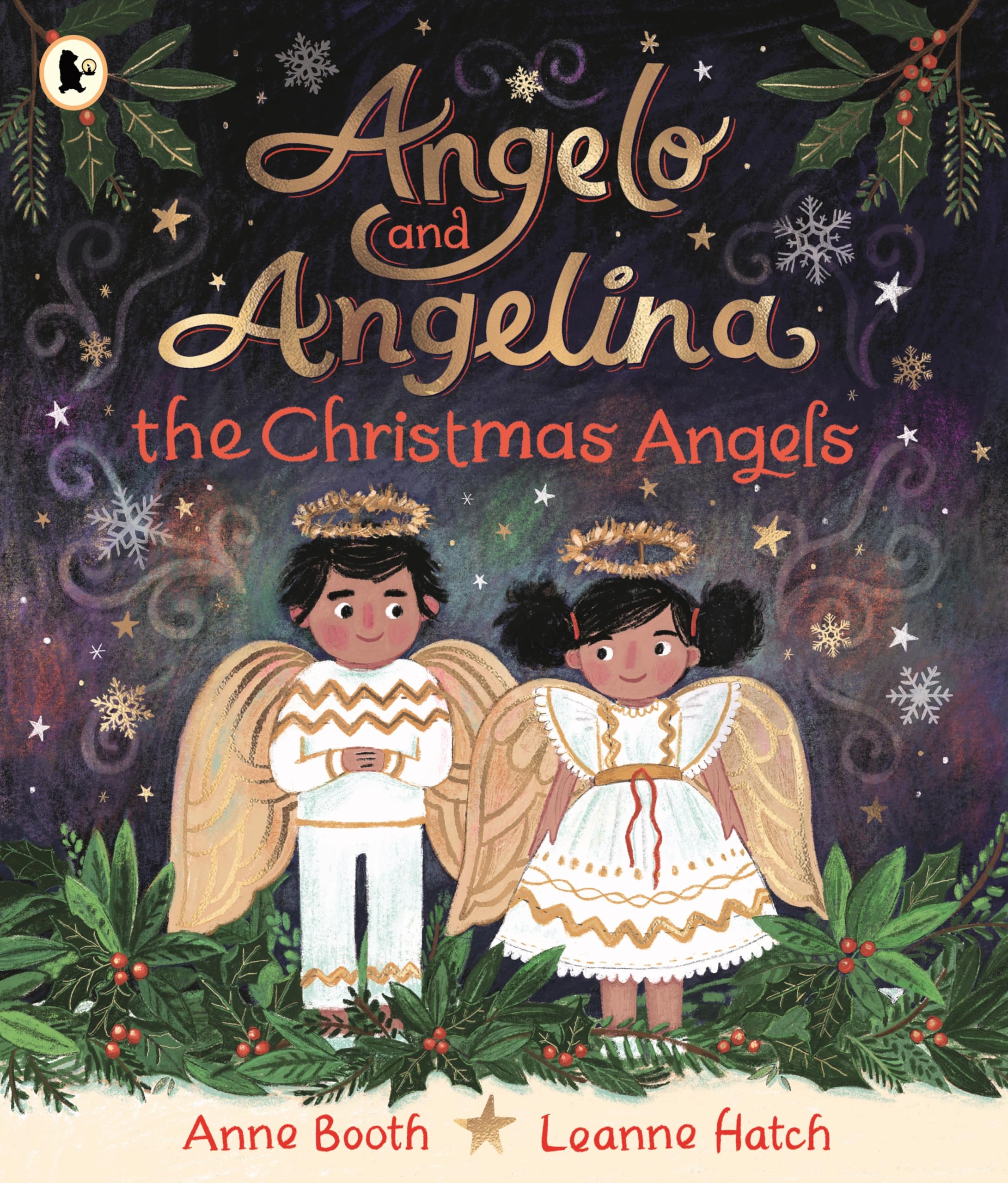
When Mrs Lovely’s world begins to shrink with age, it takes two small angels and a quiet touch of magic to open her door to the community again.
Anne Booth’s Angelo and Angelina, the Christmas Angels offers a tender festive narrative for early readers that prioritizes emotional resonance over high-octane adventure. The story centers on two toy angels—Angelo, the larger protector, and Angelina, the smaller companion—who have spent years observing the world from Mrs Lovely’s windowsill. As seasons pass, they notice their owner becoming increasingly isolated and frail, her once-bustling home growing quiet. The angels act as silent guardians, witnessing the slow creep of solitude. Rather than accepting this drift into loneliness, they use their subtle Christmas magic to spark a connection between Mrs Lovely and a young neighbor. It is a gentle, standalone tale about the passage of time and the power of small acts of kindness to bridge generational divides.
For educators supporting English language learners or students who need confidence-building texts, this book is a practical choice. The text structure works well because it pairs simple, accessible language with mature themes of aging and community. This combination is particularly useful for bridging easy readers and dense text chapter books. Booth writes with a rhythmic oral storytelling cadence, using short, declarative sentences that help struggling readers predict text flow and maintain momentum. The rich illustrations provide crucial scaffolding for abstract concepts. For instance, a child learning English can trace the visual cues of Mrs Lovely’s isolation—the empty room, the quiet window—to understand the vocabulary of emotion without needing complex textual explanations. Beyond literacy mechanics, the narrative aligns well with social-emotional learning goals, specifically regarding community care. Teachers can use the angels’ intervention to spark discussions about how small interactions combat loneliness. By combining a manageable reading level with a socially relevant narrative, this title allows developing readers to engage in meaningful discussions about empathy and citizenship without getting bogged down by difficult syntax.